How to prepare a useful lighting brief
Give your development conversation a clear starting point.
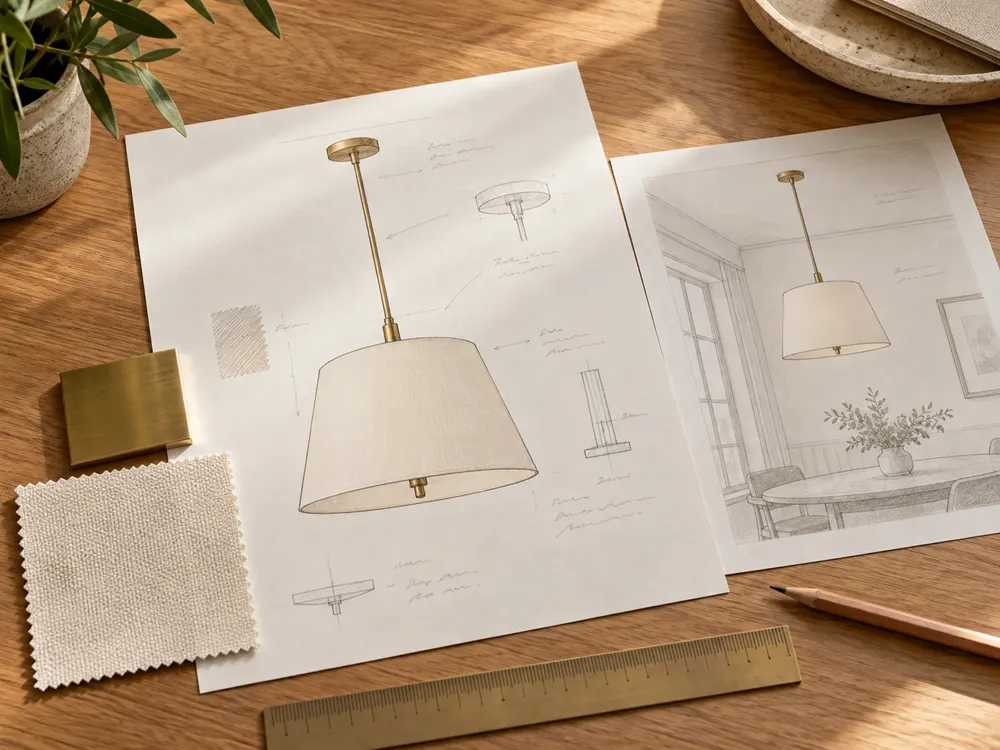
1. Describe the application
Explain where the lighting will be used and who will use it. A bedside reading light, decorative pendant and exterior wall light need different information. Include photographs of the setting where useful.
2. Separate essentials from preferences
List the requirements that cannot change, such as mounting dimensions, alongside preferences such as finish direction. This helps the development conversation focus on the right trade-offs.
3. Add measurable product information
Include overall dimensions, materials, finish references, light-source expectations, mounting and electrical details where known. Mark unknown items as questions instead of guessing.
4. Explain the commercial context
Share expected quantity, target market, sample timing and delivery expectations. If a target cost is available, explain what it includes so it can be interpreted consistently.
5. Identify the approval process
Name the person who will consolidate feedback. Agree which information will be approved before a sample and which decisions depend on seeing the sample.
Your first-brief checklist
Product and application; reference image or drawing; essential dimensions; material and finish direction; target market; quantity; timing; open questions. Bring what you have, and flag what still needs discussion.