A practical checklist for China lighting sourcing
Compare suppliers and quotations on a consistent basis.
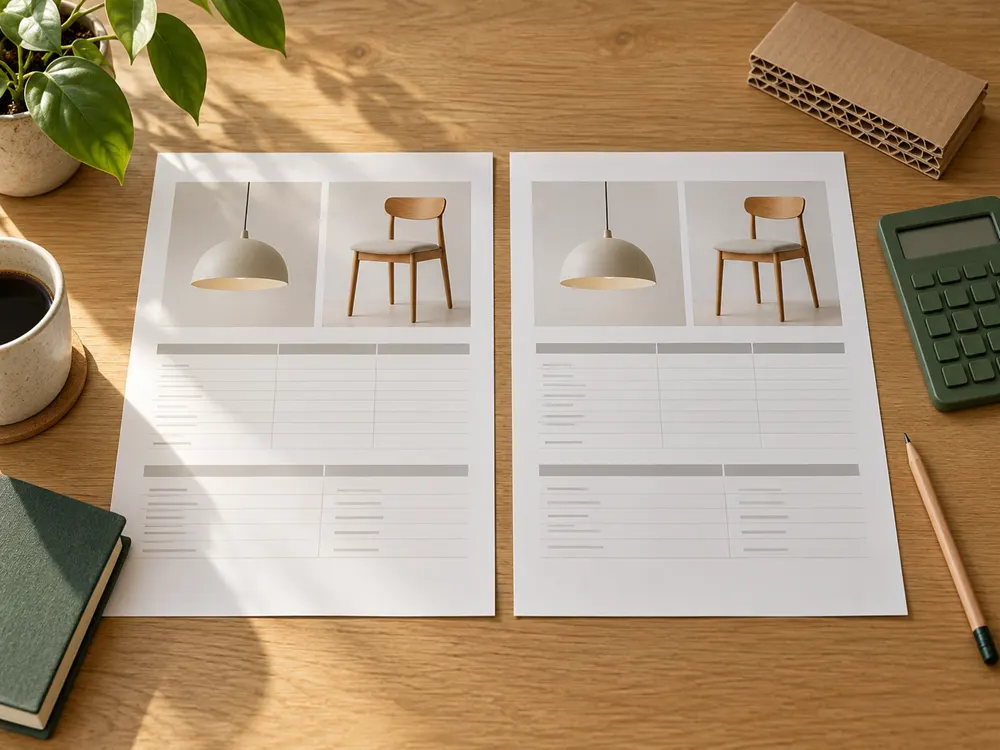
1. Compare equivalent specifications
A lower quotation may describe different materials, components or packaging. Put the product requirements side by side before drawing conclusions from unit price.
2. Clarify the production arrangement
Understand who supplies the product and how communication, samples and production follow-up will be handled. Ask for evidence relevant to the actual product and scope.
3. Confirm sample and development costs
Record whether the quotation includes samples, tooling, custom packaging and revisions. Clarify ownership and use of project-specific items where relevant.
4. Define inspection and document needs
List the checks and documents required for the product and destination. Agree responsibilities rather than assuming a general quality statement covers every requirement.
5. Review timing and handover
Discuss sample approval, production milestones and shipment arrangements. Identify the decisions that must be made on time to keep the project moving.
Build a consistent comparison sheet
Use columns for product specification, quantity, sample cost, unit cost, packaging, schedule, documents and delivery scope. Add unresolved questions beside each offer.