What to check when reviewing a lighting sample
Connect the sample review to the specification you approved.
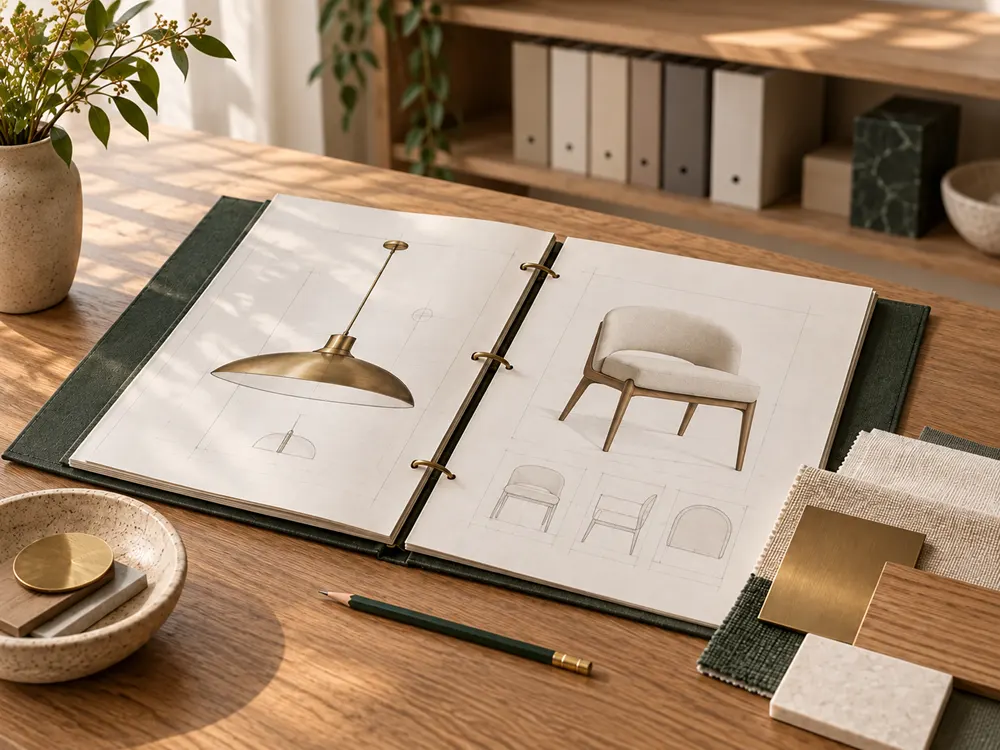
1. Start from the same specification
Confirm the sample version and the requirement document used to make it. A review becomes confusing when different participants compare the sample with different references.
2. Review appearance and dimensions
Compare proportions, visible materials, finish and key measurements. Use a written list and clear photographs to explain differences. For natural materials, discuss acceptable variation rather than expecting every piece to be visually identical.
3. Consider installation and use
Review assembly, mounting access, switch position and maintenance needs. Product suitability and required electrical checks should be reviewed by the appropriate qualified people for the intended market.
4. Review packaging as part of the product
Discuss protection, assembly instructions, labeling and how the lamp will be handled. A visually approved lamp may still need packaging work before the order is ready.
5. Consolidate feedback
Create one numbered change list. Identify each item as approved, revise or needs clarification, then confirm whether another sample or specific evidence is required.
Keep an approval record
Record the sample reference, date, approver, photographs and agreed exceptions. Carry the final approved information into production and repeat orders.